The Tape Doesn't Know It's Dead: Inside the Communities Refusing to Move On
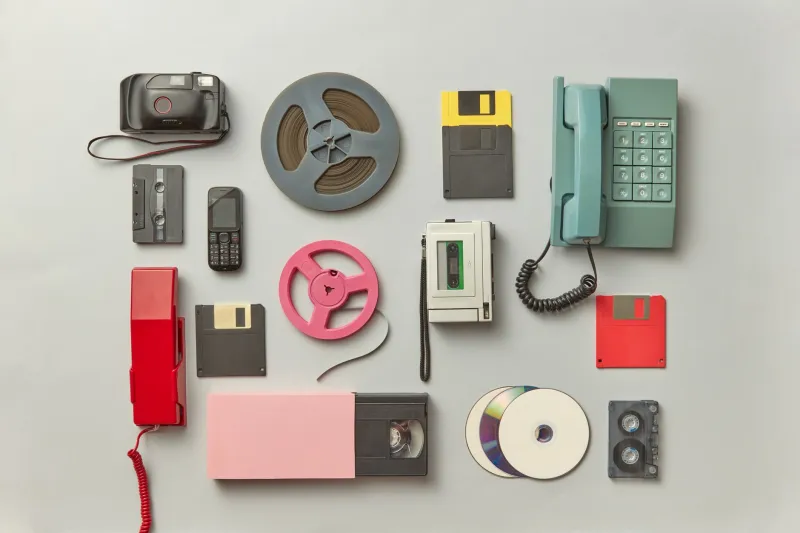
There's a MiniDisc player listed on a US-based forum right now for $340. It sold in eleven minutes. A format Sony quietly buried in 2013 is trading hands faster than concert tickets, and the buyer? Probably someone who also has a vinyl shelf, a flip phone in a drawer, and strong opinions about the sound of a cassette rewinding.
We tend to picture people who cling to old technology as nostalgic, maybe a little stuck. Spend any time in these communities and you'll find something else entirely: people who made a deliberate, often well-reasoned choice to live inside yesterday's machines. They're not behind. They just stopped believing the upgrade train was going somewhere they wanted to go.
The Archivists Racing the Clock
Start with the GeoCities people. When Yahoo shut down the beloved web-hosting service in 2009, a scrappy group called the Archive Team scrambled to scrape terabytes of hand-coded fan pages, wedding announcements, and shrines to obscure bands before the servers went dark. That rescue mission, over 900 gigabytes of it, is now mirrored around the world and browsable through projects like NeoCities, where anyone can rebuild a little HTML homepage with a hit counter and a guestbook.
For these folks, preservation isn't nostalgia—it's urgency. They know that digital things die faster than paper, and that a format nobody maintains is a library with the lights off. Some of them spend weekends rescuing floppy disks from estate sales in Ohio, transferring decades-old BBS text files before the magnetic coating gives out.
The People Who Just Like It Better
Then there's the other camp: the ones who never left. Usenet, the granddaddy of online forums, predates the web itself, and while most of the internet forgot it, dedicated servers and diehards never did. Ask a longtime user why they stuck around and you won't hear much about the past. You'll hear about threading that actually makes sense, text-only discussions with no algorithm deciding what you see, and a culture where reputation is earned post by post over decades.
The MiniDisc crowd tells a similar story. Sure, there's the satisfying clunk of the shutter and the jewel-case aesthetics. But the real pitch is functional: lossless-ish audio you can edit on the fly, physical media that fits in a jacket pocket, and a device with a battery you can actually replace. Compare that to a sealed glass slab you're expected to swap out every three years.
What the Stubbornness Is Really About
Here's the thread running through all of it: these communities aren't rejecting progress so much as rejecting substitution. When a new format arrives and takes your purchases, your library, and your workflow with it, that's not an upgrade—that's a landlord raising the rent. Choosing a 'dead' format is, in a weird way, choosing ownership. Your records don't need a subscription. Your Usenet posts don't get deplatformed because a CEO had a feeling.
There's also a social layer that's easy to miss. Small communities around niche formats are exactly that—small. Everyone knows the guy who repairs decks in his garage in Portland. Help is a forum post away, given freely, because the whole thing only survives if people pitch in. You can't say that about a platform with two billion users and a support chatbot.
Progress, Slower and On Purpose
None of this means we should all go back. The mainstream won, and mostly for good reasons—convenience matters, and most people are right not to want to babysit their media. But the holdouts serve a purpose the rest of us should be grateful for. They're the backup drives of culture, keeping skills and formats alive in case we ever want them back. Every time someone rediscovers vinyl, or a game studio ships a 'retro' pixel aesthetic, they're harvesting seeds those communities kept planted.
So the next time you see someone feeding a tape into a machine that predates the iPhone, resist the urge to feel sorry for them. They might be the ones who've figured something out: technology doesn't die when something better comes along. It dies when the last person who cares stops caring. And by that measure, plenty of 'dead' formats are the healthiest things on the internet.