Shoot First, Feel Later: How the Camera Ate Your Hobby Alive

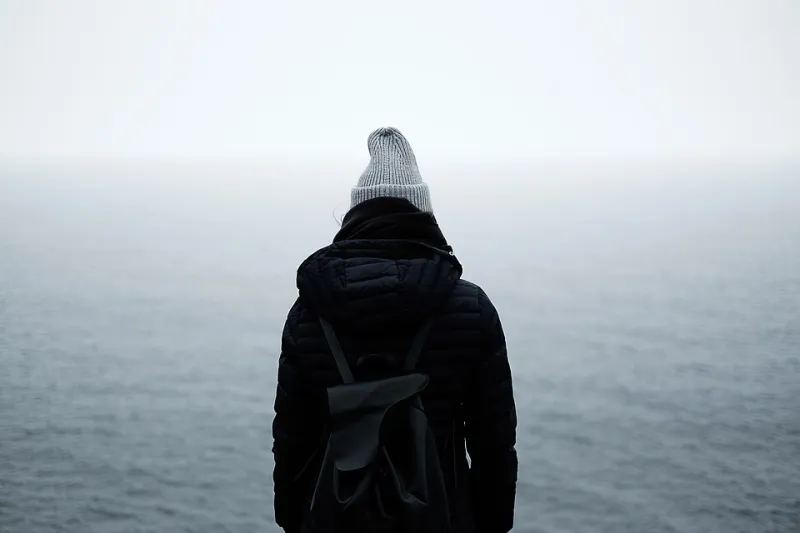
Photo by Photo by Giorgio Trovato on Unsplash on Unsplash
Somewhere between your third angle shot of the hand-dyed yarn skein and the fifteen-minute TikTok you spent editing about your latest thrift haul, the actual joy quietly left the building. You didn't notice. You were too busy checking if the lighting was right.
This isn't a lecture. It's more of a mirror — the uncomfortable kind.
Over the past few years, a strange inversion has taken hold in hobby culture across the US. The act of doing something weird and wonderful has become secondary to the act of proving you did it. Whether you're into competitive moss terrarium building, obscure vinyl pressings, hand-stitched historical costuming, or extreme hot sauce fermentation — if you're not posting about it, some part of your brain is starting to wonder if it even counts.
That's a problem worth sitting with.
The Moment the Hobby Got an Audience
For most of human history, niche hobbies existed in gloriously private little pockets. You had your people — maybe a local club, a mail-order newsletter, a dusty message board — and that was enough. The hobby existed for you, and the community existed to share it quietly among people who already got it.
Then came the algorithmic attention economy, and suddenly your obscure interest had monetization potential. TikTok's "For You" page started surfacing the most specific, niche content imaginable and rewarding it with views. YouTube channels dedicated to incredibly narrow topics — restoring antique typewriters, competitive rubber duck racing, extreme ironing — found audiences in the hundreds of thousands. The message was clear: your weirdness has value, but only if you perform it.
The problem isn't that these communities grew. Growth can be genuinely great. The problem is what performing for growth does to the internal experience of the hobby itself.
Psychologists have a term for this: the overjustification effect. When you introduce external rewards — views, likes, followers, sponsorships — into an activity you previously did for its own sake, the intrinsic motivation starts to erode. You stop doing it because it fills you up. You start doing it because the metrics demand it.
Proof Culture and the New Hobby Tax
Call it proof culture. The unspoken expectation, baked into every corner of social media, that your experience isn't fully real until it's been documented, captioned, hashtagged, and offered up to the algorithm for judgment.
It shows up in subtle ways at first. You start thinking in thumbnails. You frame your workbench differently because it photographs better. You delay starting a project until you've set up the time-lapse. You choose which obscure record to dig for at the flea market based partly on whether it'll make a good unboxing video.
None of these individual choices feel like a big deal. Together, they fundamentally restructure your relationship with the thing you love.
Several creators who've stepped back from constant documentation describe a version of the same experience: a moment where they realized they couldn't remember the last time they'd done their hobby without their phone in their hand. One ceramics enthusiast from Portland put it bluntly in a now-deleted thread on a pottery forum: "I was making pots for Instagram. I wasn't making pots. There's a difference and I lost it for two years."
That loss is real, and it's worth naming.
Performing Weirdness Is Exhausting in a Specific Way
There's something particularly draining about performing niche identity online, as opposed to more mainstream hobbies. When your thing is weird — genuinely weird, not quirky-for-the-algorithm weird — there's an additional layer of pressure. You become a translator. An ambassador. You're not just sharing the hobby; you're justifying its existence to people who think it's strange, while simultaneously proving your authenticity to the existing community who might think you're only in it for clout.
You're managing two audiences with opposing suspicions, and doing it constantly.
This is the authenticity paradox at its sharpest edge: the more you document your genuine weirdness, the more you have to perform it, and the more you perform it, the less genuine it becomes. You end up in a loop where you're chasing the feeling the hobby originally gave you by doing more of the thing that's making it feel hollow.
The communities themselves often make this worse, not better. Forums and subreddits dedicated to niche interests have developed their own proof cultures — elaborate hierarchies of who's "really" into it versus who's just there for the aesthetic. Posting your work invites scrutiny. Not posting makes you invisible. Either way, the hobby is no longer just yours.
What Stepping Back Actually Looks Like
A growing number of hobbyists are quietly experimenting with what some call "private practice" — consciously keeping portions of their hobby entirely off-platform. No photos. No documentation. No sharing. Just doing the thing for the sake of doing it, the way people did before the internet decided everything was content.
It sounds simple. It turns out to be surprisingly hard.
One embroiderer in Austin described the first few weeks of her phone-free stitching sessions as genuinely uncomfortable. "My hand would keep reaching for it. Not because I wanted to share anything specific — just because the reflex was there. Document, document, document." She kept going anyway. "By week three, I remembered why I started doing this in the first place. I cried a little, which felt embarrassing to admit, but it was real."
That's the thing about reclaiming a hobby from the documentation machine: it often involves re-encountering the original feeling that drew you in, and realizing how long you'd been away from it.
The Velvet Rabbit Take
We're not anti-sharing here. Genuinely. Some of the most beautiful things about niche hobby culture is its generosity — the way people teach each other, inspire each other, and build weird little worlds together online. That stuff matters.
But there's a difference between sharing because you want to connect and sharing because the algorithm has trained you to believe your experience only counts when it's witnessed. One of those things builds community. The other quietly hollows you out.
Your hobby doesn't owe anyone a content calendar. The weird thing you love doesn't need to justify itself with views. You are allowed — genuinely, fully allowed — to do your thing in the dark, for no audience, with no proof, and have it be completely, totally real.
Sometimes the most radical act in 2024 is just putting the phone down and making the pot.