The New Velvet Rope: Why We're All Chasing Spaces That Won't Let Everyone In
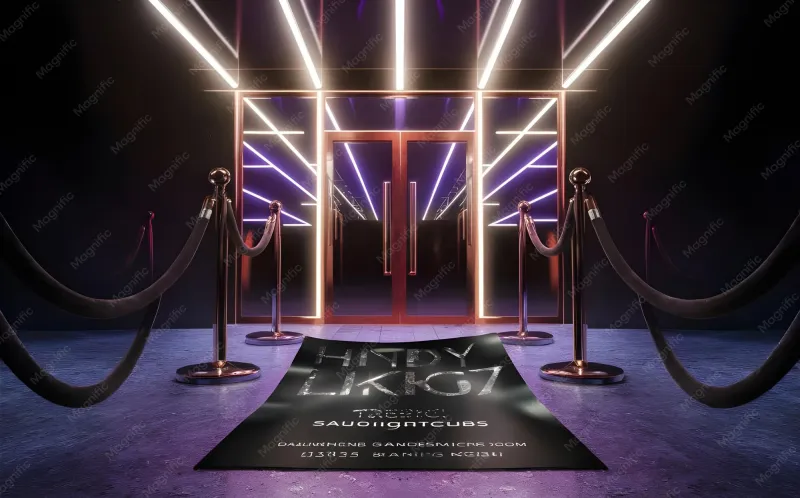
Photo: velvet rope exclusive nightclub entrance moody dark atmospheric neon, via img.freepik.com
Let Me Be Honest With You for a Second
I am exhausted by the open internet.
I don't think I'm alone in that. There's something deeply fatiguing about spaces where everyone is performing for an invisible audience, where every opinion is immediately subject to the full weight of algorithmic amplification, where authenticity has become its own brand aesthetic. The feed never stops. The discourse never resolves. The content just keeps coming.
So it makes a certain kind of sense that the cultural experiences generating the most genuine excitement right now are the ones you can't just stumble into. The dinner party you need to be referred to. The Discord server with an application process. The art show with no listed address until forty-eight hours before. The bar that looks like a laundromat from the outside.
Exclusivity is back. But it's weirder — and more interesting — than it used to be.
This Isn't Your Parents' Velvet Rope
Old-school exclusivity was pretty straightforward: money, status, and connections got you in. The velvet rope outside Studio 54 was a power flex. The members-only club was about sorting people by class. The guest list was a social hierarchy made physical.
What's happening now is different in texture, if not always in mechanism. The new gatekeeping isn't primarily about wealth — it's about taste, values, and genuine interest. The most coveted spaces in 2024 aren't necessarily expensive. They're specific.
Consider the wave of invite-only apps that generated genuine cultural buzz: Clubhouse had its moment by making audio conversations feel like crashing a private party. Geneva positions itself as a calmer, more intentional alternative to chaotic social feeds. BeReal briefly captured attention by demanding authenticity at random moments. Each of these platforms built early excitement not through open access but through the social friction of needing to be let in.
The speakeasy bar trend has been building for over a decade but shows no signs of slowing. Cities like New York, Chicago, Austin, and LA have seen a proliferation of venues that require reservations made through obscure websites, accessed through hidden entrances, with menus that change without announcement. The effort required is the point. You're not just buying a drink — you're buying into a shared fiction that this place is special because not everyone knows about it.
The Algorithm Made Us Do This
Here's my actual thesis: the hunger for exclusivity is a direct response to algorithmic social media, and Gen Z understands this more intuitively than any previous generation.
When every piece of content is optimized for maximum reach, when the feed is engineered to keep you scrolling rather than to show you what you actually care about, when going viral is something that can happen to anyone at any moment — the experience of public space online becomes genuinely destabilizing. There's no sense of place. No community. Just content moving past you at speed.
Gated spaces offer the opposite experience. A Discord server with two hundred members who all care deeply about the same niche thing creates a sense of genuine community that a subreddit with two million passive lurkers simply cannot replicate. A members-only newsletter feels like a letter from a friend rather than a broadcast to a demographic. An underground art show feels like a discovery rather than a content delivery event.
The exclusivity isn't the goal — it's the byproduct of curation. And curation is what the algorithm systematically destroys.
The Underground Art Scene Is Doing Something Right
Spend any time in cities with active underground art scenes and you'll notice something: the most interesting work is happening in spaces that actively resist documentation. Shows announced through word of mouth. Galleries in warehouses with no signage. Performance art that explicitly prohibits phones.
This isn't precious gatekeeping for its own sake — it's a genuine attempt to create experiences that exist outside the content economy. When something can't be photographed and posted, it can only be experienced. The people in the room share something that can't be transmitted to people who weren't there.
That's incredibly rare now. And rarity creates value.
Young artists, in particular, seem to be making intentional choices about where and how they share work. The gallery that requires an RSVP and limits attendance to fifty people creates a different relationship between artist and audience than an Instagram post seen by ten thousand strangers. Both have their place — but one of them creates actual community.
The Critique Is Fair, Though
I want to be honest about the tension here, because I think it's real and worth sitting with.
Exclusivity, even when it's ostensibly about taste rather than class, can easily replicate the same hierarchies it claims to reject. Invite-only communities tend to reproduce the demographics of whoever's doing the inviting. Speakeasy bars in gentrifying neighborhoods are accessible to some people and not others for reasons that have nothing to do with cultural authenticity. The "underground" can be a vibe aesthetic just as easily as it can be a genuine alternative.
The best versions of exclusive communities are the ones that are intentional about why they're gated. Is it to maintain a specific conversational culture? To protect a vulnerable community? To ensure genuine engagement rather than passive consumption? Those are defensible reasons to build a wall.
Is it to make members feel superior? To replicate existing power structures with a cooler aesthetic? That's just the old velvet rope with better branding.
The communities worth seeking out — and worth building — know the difference.
What We're Actually Looking For
Under all of it, I think the exclusivity trend is pointing at something simple and very human: we want to feel like we're somewhere real, with people who actually give a damn, doing something that matters to them.
The algorithm can't give us that. The open feed can't give us that. A thousand followers who passively scroll past your posts can't give us that.
But a small, weird, specific community of people who found each other through genuine interest? A bar that feels like a secret? An art show that only exists for the people in the room?
That can give us that.
The velvet rope isn't about keeping people out. At its best, it's about making sure that the people inside actually want to be there — and building something worth wanting in.
We're all just looking for the room where that's happening. Some of us are lucky enough to find it.