Off the Grid, On the Market: How Niche Communities Are Inventing Their Own Economies
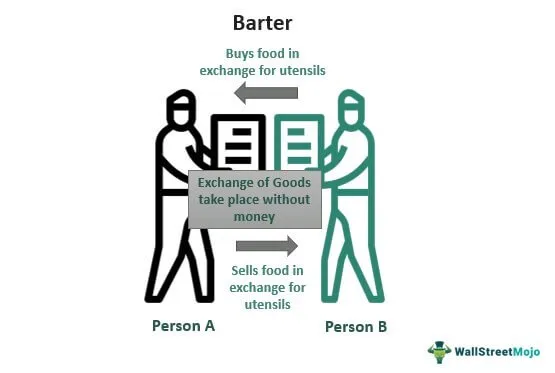
Photo: underground market barter trade alternative economy niche community exchange, via wallstreetmojo.com
The Opt-Out Economy
Somewhere in a Discord server you've never heard of, someone just traded six hours of texture modeling work for a lifetime license to a piece of indie game software. No PayPal. No invoice. No taxes, technically. Just two people who found each other through a shared obsession and decided that the conventional economy wasn't particularly relevant to their transaction.
This is happening more than you'd think. Across the weirder, more insular corners of the internet, niche communities have been quietly constructing their own financial architectures — systems of exchange, value, and even credit that operate largely outside mainstream commerce. Some of it is ideological. Some of it is practical. Some of it is just what happens when a group of people are passionate enough about something that money starts to feel like a clumsy tool for the job.
Modders, Makers, and the Labor Swap
The indie game modding community is one of the oldest and most sophisticated examples of an underground economy in action. Modders — the people who create unofficial additions, alterations, and expansions for existing games — have been trading skills and assets since the early days of PC gaming. But what's evolved in the last decade is something more structured than a casual favor exchange.
In communities built around games like Skyrim, Stardew Valley, and the broader space of open-world titles, there are now informal but widely understood systems of reciprocal labor. A 3D artist might provide custom assets to an animator in exchange for cutscene work on their own project. A programmer trades bug fixes for level design. It's not barter in the crude, chicken-for-grain sense — it's a sophisticated peer economy with its own reputation systems, social contracts, and even something resembling credit.
"The currency is your body of work and your reputation in the community," says one modder who's been active in the Elder Scrolls modding scene for over a decade. "Money would actually make it weirder. It would change the relationship."
That last line is worth sitting with. In these spaces, the introduction of conventional money isn't just impractical — it's sometimes actively unwanted. It changes power dynamics. It creates hierarchy. It turns a community of peers into something that looks a lot more like the mainstream economy they're already navigating in their day jobs.
Film Rolls and Film Debt: The Analog Photography Underground
Over in the analog photography world, a similarly inventive economy has been developing around a resource that's becoming increasingly scarce and expensive: film.
As major manufacturers have cut back production and prices for 35mm and medium-format film have climbed sharply, communities on Reddit, dedicated forums, and group chats have developed informal systems for sharing, trading, and even lending film stock. There are group buys — collective purchasing arrangements that let communities order film in bulk at reduced cost — but there's also something more interesting happening at the edges.
Some tight-knit photography collectives have developed what they call "film banks" — shared repositories of film stock that members contribute to and draw from based on community standing and contribution history. It's not quite a currency. It's not quite a library. It sits somewhere in between, governed by trust and social accountability rather than contracts.
"We had someone new join and immediately try to take without contributing," recalls a member of one such collective based in Chicago. "The community just... stopped responding to them. There's no formal enforcement mechanism. It's entirely social. But it works."
What's notable here is that these systems are often more effective at preventing exploitation than formal commercial arrangements. Because reputation is the currency, bad actors are identified and excluded quickly. The community is the regulator.
NFTs, Creator Coins, and the Ideology Problem
Of course, not every attempt to build an alternative economy stays underground. The NFT boom of 2021-2022 was, in part, an attempt to formalize exactly this kind of community-based value exchange — to create verifiable digital ownership for things that niche communities already understood as valuable. And we all know how that particular experiment went.
The collapse of the broader NFT market didn't kill the underlying impulse, though. Smaller, more coherent communities have continued experimenting with creator coins, community tokens, and platform-specific economies that don't require buy-in from the mainstream crypto market. Some indie musicians have issued tokens that function like loyalty programs. Independent publishers have experimented with subscription models that include community governance rights — essentially letting readers vote on editorial direction.
These experiments are genuinely interesting. They're also genuinely complicated. Because the moment you formalize a community economy, you start introducing the same dynamics you were trying to escape. Who controls the token supply? Who decides the exchange rate? Who gets founding-member advantages? These aren't hypothetical questions — they're the exact questions that have fractured more than a few otherwise healthy communities.
Freedom or Just New Gatekeeping?
Here's the uncomfortable tension at the center of all of this: alternative economies built by communities often end up replicating the exclusionary structures of mainstream commerce, just with different gatekeepers.
The film bank that keeps out bad actors is also, functionally, keeping out newcomers who haven't yet had the opportunity to build reputation. The modding community that trades on social capital rewards people who got there early and had time to accumulate standing. The creator token system that gives governance rights to early adopters concentrates power in the hands of the first wave, not the most engaged current community.
This isn't a reason to dismiss these experiments — it's a reason to be clear-eyed about what they actually are. They're not post-economic utopias. They're economies with different values embedded in them. The question isn't whether an underground economy is gatekeeping — all economies gatekeep, always — but whose values are doing the gatekeeping and whether those values actually reflect the community's stated ideals.
Why It Still Matters
Despite the complications, there's something genuinely significant happening in these spaces. At a moment when mainstream commerce feels increasingly extractive — when every platform takes its cut, every algorithm optimizes for someone else's revenue, and every creative community eventually gets discovered and monetized into blandness — the impulse to build something outside that system is meaningful.
The modder trading textures for animation work isn't naive about capitalism. They're making a deliberate choice about which transactions they want to have and on what terms. The photographer contributing to a film bank isn't unaware that money exists. They're choosing a system of exchange that reflects something they care about — community, sustainability, shared investment in a practice they love.
These parallel economies probably aren't going to replace mainstream commerce. But they don't need to. They just need to work well enough, for long enough, to keep the communities they serve alive and weird and theirs.
That, it turns out, is worth a lot — even if it's hard to put a price on.