Priced Out of the Weird: When Your Obscure Hobby Became a Luxury Good

Photo: Steindy (talk) 21:19, 29 September 2014 (UTC), GFDL 1.2, via Wikimedia Commons
There used to be something almost democratic about being a weirdo. You liked obscure things. You found your people in the margins — at record fairs, in IRC channels, through zines you found at the back of a record store. The barrier to entry was mostly just knowing where to look. Money didn't really factor into it. Weirdness was, in a strange way, one of the few spaces where being broke didn't automatically exclude you.
That era is starting to feel very far away.
Somewhere between the monetization of niche content and the gamification of community membership, the cost of being genuinely into obscure things has quietly skyrocketed. And it's worth asking, honestly, what we've lost in the process.
The Paywalled Underground
Let's start with Discord, because it's become the clearest symbol of this shift. What began as a free voice chat platform for gamers has evolved into the primary infrastructure of niche internet culture — and it has a tiered economy built right into it.
Servers for niche communities now routinely offer paid membership levels. Pay $5 a month and you get access to the channels where the real conversation happens. Pay $15 and you get early access to group buys, exclusive bots, curated resources, or direct access to the server's most respected voices. The free tier exists, technically, but it increasingly functions as a demo — a preview of a community you can only really participate in if you're willing to open your wallet.
This isn't inherently malicious. Server operators have real costs. Moderators deserve compensation. But the cumulative effect, when you're someone who belongs to six or seven niche communities and each one has a premium tier, is a monthly subscription overhead that starts to look a lot like a cable bill. The underground has a paywall now.
The Limited Drop Industrial Complex
Then there are the drops. Oh, the drops.
Limited-edition releases have always existed in niche hobby culture — that's part of what made certain items feel special. But there's a meaningful difference between a small-batch art print that sells out because production was genuinely limited, and a manufactured scarcity event designed specifically to drive up perceived value and create FOMO-fueled purchasing decisions.
The mechanical keyboard community, the sneaker resale market, the world of limited-run enamel pins and indie fragrance releases — they've all developed their own versions of the drop economy. And while the products themselves are often genuinely excellent, the structure around them has become increasingly hostile to people without both significant disposable income and the time to monitor release announcements, set calendar alerts, and act within a 90-second purchase window before everything sells out.
If you miss the drop, you can always buy on the secondary market — at two or three times the retail price. Participation, increasingly, is a financial privilege.
What We Talk About When We Talk About Authenticity
Here's the thing that makes this complicated: niche communities have always had gatekeeping. That's part of how they maintain their identity and protect the things that make them special. The old gatekeeping was mostly knowledge-based — you had to know your stuff, put in the time, earn your credibility through genuine engagement. That kind of gatekeeping, frustrating as it sometimes was, at least rewarded investment of effort rather than investment of dollars.
The new gatekeeping is financial. And financial gatekeeping has a very different character. It doesn't care how much you know or how long you've been around. It cares about your credit card limit.
This matters because one of the things niche communities have historically offered is a genuine alternative to mainstream status hierarchies. You might not have the fancy car or the designer clothes, but inside your specific corner of the internet, you had standing. You had expertise. You had community. The monetization of niche spaces is slowly eroding that alternative, replacing it with a status system that maps uncomfortably closely onto the one you were presumably escaping.
The Irony Isn't Lost
There's a certain darkly funny quality to all of this. The aesthetics and communities that emerged as alternatives to mainstream consumer culture have become, in many cases, more expensive to participate in than mainstream consumer culture. Cottagecore requires a specific wardrobe that'll run you hundreds on Etsy. Audiophile culture starts at around $300 for entry-level gear and has no visible ceiling. Even the most DIY-coded subcultures — zine-making, indie music, underground fashion — have premium tiers now, whether that's Patreon-exclusive content or limited physical releases that sell for $80 before they're even printed.
The people who built these communities, in many cases, didn't set out to create luxury markets. They were just trying to sustain the things they loved. But the tools available for doing that — subscription platforms, limited drops, tiered community access — all push in the same direction. They convert passion into a product, and products have prices.
So Where Does That Leave Us?
Honestly? It's a mixed picture. Some of the financial infrastructure around niche communities genuinely supports the artists, creators, and organizers who make those spaces worth being in. That matters. Creators deserve to be paid, and the free-content economy has done real damage to a lot of people who poured their lives into building something.
But it's worth being clear-eyed about the trade-off. As niche communities become more economically sophisticated, they inevitably become more economically stratified. The people who can afford to participate fully will have a different experience than the people who can't. And some of the most interesting voices in any subculture are broke kids who haven't figured out their finances yet — the exact people who are most likely to be priced out.
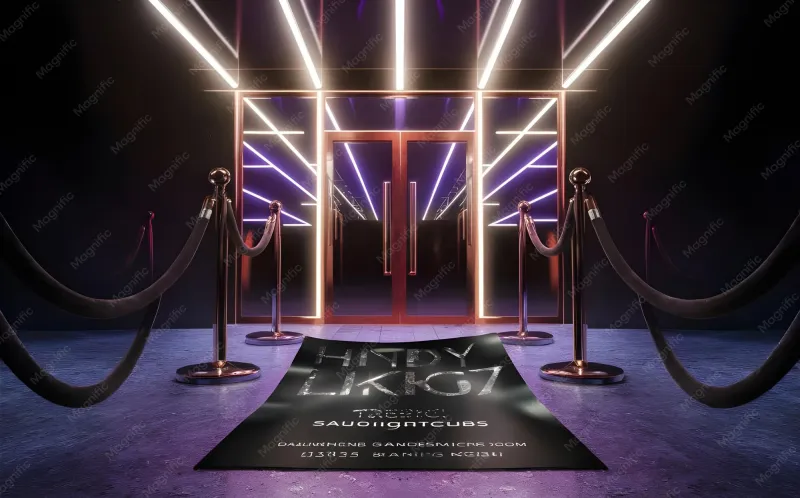
Weirdness used to be cheap. It used to be one of the few things that didn't cost much to access if you were willing to look hard enough. That's changing, and not entirely for the better. The velvet rope has always existed. We just didn't expect to find it at the entrance to the rabbit hole.