You Can't Have It: Why the Hardest-to-Get Things Have Become the Most Wanted
Somewhere right now, someone is paying $400 for a Funko Pop that retailed for $15. Someone else is deep in a forum thread trying to locate a YouTube video that was deleted in 2011 and may or may not still exist on a single hard drive in rural Ohio. And somewhere else entirely, a person is on month three of a waitlist for a Discord server that — from the outside — appears to be a community about vintage cookware.
None of this is irrational, exactly. It just looks that way until you understand what's actually being purchased.
The Thing Behind the Thing
When someone drops serious money on a limited-edition sneaker release or spends weeks hunting a discontinued piece of media, they're not just buying an object. They're buying proof — proof that they were paying attention, that they have taste, that they belong to a group that gets it before everyone else does.
Scarcity has always implied value. That's not new. What is new is the scale and speed at which artificial scarcity can be manufactured and the degree to which online communities have turned the hunt itself into a performance.
In the analog world, having something rare was mostly a private satisfaction — you owned the thing, maybe a few people knew, great. In the social media era, owning the thing is only half the point. The other half is demonstrating that you own it, in the right spaces, to the right audience, in a way that reads as effortlessly knowing rather than desperately trying.
That's a genuinely complicated needle to thread, and the whole culture around rare collectibles has developed an elaborate etiquette around it.
The Economics of Unobtainable
Let's talk about how this actually works, because the mechanics are fascinating.
Take sneaker culture. Nike and Adidas have been running limited-release playbooks for decades now — drop small quantities, generate hype, watch resale prices spike, let the resale market do the marketing for you. The secondary market for sneakers in the US alone is worth billions of dollars annually. StockX exists entirely because of this dynamic. The scarcity isn't accidental; it's engineered.
Funko Pops operate similarly. The company produces "exclusive" variants tied to specific conventions, retailers, or subscription boxes. Some of these exclusives become genuinely rare over time — production runs end, the IP lapses, the item disappears from shelves. The secondary market prices balloon. What was a $12 piece of vinyl becomes a $300 grail item that serious collectors display behind UV-protective glass.
But here's where it gets interesting: the hunt often becomes more culturally significant than the object. There are entire subreddits, YouTube channels, and TikTok accounts dedicated not to owning rare things but to documenting the process of chasing them. The search for a deleted piece of internet media — a lost episode, a pulled music video, a game that never got an official release — can generate years of community activity and genuine archival scholarship. The object is almost beside the point. The shared obsession is the community.
The Gatekeeping Economy
Nothing says "you're not ready" quite like a waitlist.
Exclusive Discord servers have become a surprisingly potent status signal in certain online communities. Some are genuinely small and intimate by necessity — a creator's inner circle, a group of professionals in a niche field. But others have adopted the waitlist model as a branding choice. The barrier to entry becomes the selling point. If anyone could join, it would mean something different to be a member.
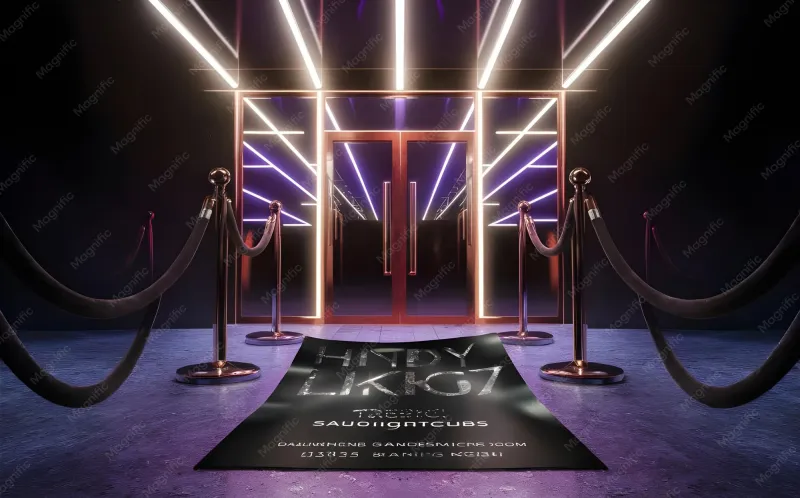
This mirrors the old velvet rope logic of nightlife culture — the line outside the club isn't just logistics, it's theater. It tells people on the sidewalk that something worth wanting is happening inside. The Discord waitlist is the velvet rope for the chronically online.
Brands have caught on, obviously. The "drop" model — limited quantities, announced with minimal notice, gone in minutes — has migrated from sneakers into food, art, music, software, and community memberships. Supreme built an entire retail empire on this premise. Smaller creators use it to sell out merchandise runs in under an hour. The artificial scarcity creates urgency that no amount of conventional advertising can replicate.
Fear of Missing Out, But Make It a Lifestyle
FOMO used to be a social anxiety. Now it's a market force.
The fear that something will be gone before you can get to it — that the window will close, the server will fill, the item will sell out — has been so thoroughly baked into consumer culture that entire purchasing behaviors have reorganized around it. People set alarms for drops. They pay bot-detection bypass fees. They join notification services for things they're not even sure they want yet, just to preserve the option of wanting them.
The psychological mechanism here is well-documented: loss aversion. We feel the pain of missing something more acutely than we feel the pleasure of getting it. Scarcity marketing weaponizes this directly. "Only 3 left" is one of the most effective sentences in e-commerce.
But there's a flip side that doesn't get talked about as much: the communities that form around the hunt are often genuinely rich and rewarding. The people archiving lost internet media are doing real cultural preservation work. Collector communities share expertise, history, and genuine enthusiasm. The gatekept Discord might be annoying to get into, but once you're in, you might find your people.
What We're Really After
It's easy to be cynical about all of this — and honestly, some cynicism is warranted when brands are deliberately manufacturing scarcity to extract money from people's anxiety. That's worth naming clearly.
But underneath the economics and the marketing manipulation, there's something more human going on. The desire to have something rare, to be part of a group that found something before it was everywhere, to demonstrate that your attention and taste are discerning — these are ancient social drives dressed in modern clothes.
We've always wanted to belong to the group that knows. We've always wanted the thing that signals membership. The internet just gave us a thousand new categories of rare, a thousand new groups to belong to, and a global audience to perform our belonging for.
The velvet rabbit understands the appeal of the hidden thing, the found thing, the thing you had to work a little to get. Sometimes the best stuff really is tucked away somewhere you have to go looking. The trick is knowing when you're genuinely finding something worth having — and when you're just being played.